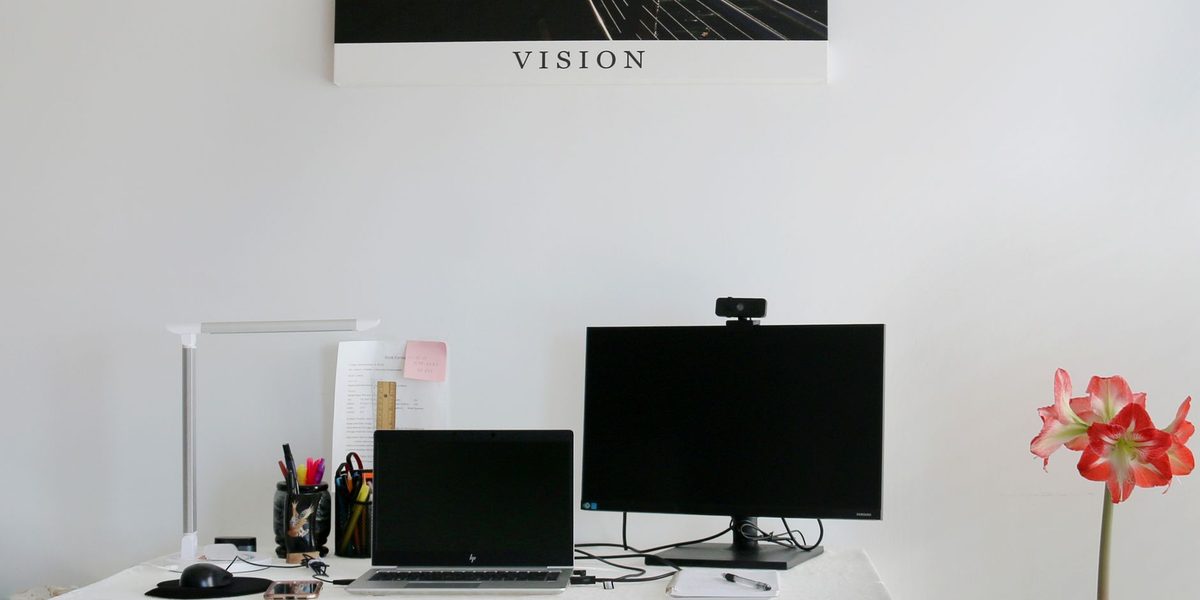
A messy desk is rarely a character flaw. It is almost always a design flaw: too many objects with no assigned home, surfaces that invite piles, and a cleaning approach that depends on occasional bursts of motivation instead of a system that runs on its own. The people whose workspaces stay clean are usually not more disciplined than everyone else. They have simply arranged things so that tidiness is the path of least resistance. If you would rather spend your energy on work than on housekeeping, the goal is not to clean more. It is to build a workspace that barely needs cleaning, and then maintain it in minutes, not weekends.
Shrink the Problem Before You Solve It
Every object in your workspace is a future cleaning task. It collects dust, occupies surface area, and gets shuffled every time you need the space beneath it. So the highest-leverage move in low-effort cleanliness has nothing to do with cleaning: it is owning fewer things in the room where you work. Do one honest pass through the workspace and remove everything that has not been touched in a month, the dead pens, the cables to nowhere, the paperwork from a finished project, the decor you stopped seeing long ago. Relocate what belongs elsewhere, box what you are unsure about, and discard the rest.
This is not minimalism for its own sake; it is arithmetic. A desk with eight objects on it can be wiped down in thirty seconds and never looks chaotic even at its worst. A desk with forty objects cannot be cleaned without an archaeology session first. Every item you remove permanently lowers the maintenance cost of the room.
Give Everything Exactly One Home
Clutter is what accumulates when objects have no destination. The fix is a rule so simple it sounds trivial: every item that lives in your workspace gets one specific home, and things return there when you finish with them. The pen has a drawer slot. The headphones have a hook. The notebook has a corner. Incoming paper has a single tray. When homes exist, putting something away is a two-second reflex; when they do not, putting something away means making a decision, and deferred decisions are what piles are made of.
Two details make this work in practice. First, homes must be convenient, storage you can reach from your chair gets used, storage across the room does not. Second, keep a designated junk catcher, one small box or drawer for the genuinely homeless items, and empty it whenever it fills. Containing the chaos to one closed spot keeps it off the surfaces where you would otherwise see and shuffle it daily.
The Two-Minute Reset at the End of Each Day
Here is the entire daily cleaning routine a well-designed workspace needs: before you finish work, spend two minutes returning things to their homes. Mug to the kitchen, papers to the tray, pen to the drawer, chair pushed in, cables draped where they belong. That is all. Done daily, this reset means the mess never gets more than one day deep, and a one-day mess takes two minutes to undo, which is why the routine survives when longer ones collapse.
The reset earns its keep twice. It closes the workday with a small physical ritual, which helps you actually stop working, and it means tomorrow begins at a clear desk instead of yesterday's residue. Sitting down to a clean surface in the morning is a genuinely different start to the day than excavating a spot for your coffee. If you skip a day, nothing catastrophic happens; the next reset takes four minutes instead of two. The system forgives lapses, which is exactly what a low-effort system should do.
Design Surfaces That Repel Clutter
Flat, empty, reachable surfaces attract objects the way gravity attracts dropped toast. You cannot eliminate the tendency, but you can design against it:
- Keep the desk's default state visible. When a surface is fully clear each morning, a single stray item looks out of place and gets dealt with. On an already-cluttered surface, one more item is invisible.
- Prefer closed storage over open. Drawers, boxes with lids, and cabinets hide what shelves display. Open shelving in a workspace should hold few, deliberate items, not overflow.
- Remove the extra chair or clear bench nearby if it has become a landing zone for bags and laundry. Horizontal surfaces you do not need are clutter magnets you are volunteering to manage.
- Put a small trash bin and recycling spot within arm's reach. A wrapper or dead sticky note travels to a bin you can reach without standing; otherwise it settles on the desk.
None of this requires tidiness as a personality trait. It stacks the environment so that the lazy option and the tidy option are the same option.
Make Dust and Grime Structurally Harder
Beyond clutter, workspaces generate their own particular grime: dust drawn in by electronics, crumbs from desk lunches, smudged screens, and the special gray film that colonizes keyboards. Attack these structurally rather than repeatedly. Getting cables off the floor and into a tray or sleeve eliminates the fuzzy tangle that vacuums cannot reach and turns floor cleaning under the desk into one straight pass. Choosing a desk with legs rather than closed sides, or leaving clearance beneath furniture, means a robot vacuum or a quick sweep actually covers the area.
Then shorten the distance to the tools. Keep a microfiber cloth and a small brush or keyboard blower in a desk drawer, not in a cupboard two rooms away. When wiping the screen takes ten seconds and zero walking, it happens weekly; when it requires a supply expedition, it happens never. A washable desk pad catches the crumbs and pen marks that would otherwise mark the desk itself, and cleaning it means shaking it out. And if you eat at your desk regularly, a once-a-week wipe-down of surface, keyboard, and mouse is realistic hygiene; daily lunches and never cleaning is not a combination that ages well.
Do a Monthly Sweep So Nothing Deepens
Daily resets keep surfaces clear, but a workspace still slowly accretes, the drawer fills, papers outlive their usefulness, dust settles on the things you never move. A short monthly sweep, fifteen to twenty minutes on a calendar reminder, catches this drift before it becomes a project. Empty the junk drawer or catch-all box. Process the paper tray down to zero. Wipe the surfaces you skip daily: monitor base, lamp, shelf tops, windowsill. Glance under the desk and rescue whatever fell behind the cable tray.
The monthly sweep is also when you audit the system itself. If the same category of object keeps stranding on the desk, it needs a better home. If a drawer has become impossible, it has too much in it. Treat recurring mess as feedback about design, not evidence of personal failure, adjust the setup, and the mess usually stops recurring.
Final Thoughts
A perpetually clean workspace is not maintained by willpower; it is maintained by a handful of structural choices that make tidiness nearly automatic. Own less in the room. Give every remaining item one convenient home. Reset for two minutes at the end of each day, keep cleaning tools within arm's reach, and sweep through once a month to catch the drift. Set the system up once and it quietly runs forever, and the reward is bigger than aesthetics: a clear desk each morning is a small daily signal that the workday is under control before it has even started.