Every remote worker eventually has the conversation with themselves: is working from home still working? For some, the home office is a sanctuary of focus that no shared space could match. For others, it has quietly become a place where the days blur, the fridge beckons, and a week can pass without speaking to another adult in person. Co-working spaces promise structure, energy, and other humans, at the cost of money, a commute, and someone else's phone calls. Neither option is universally better, and the real question is not which one wins but which one your current life is asking for. Here is how to read the signs and make the switch, in either direction, without regret.
What Working From Home Actually Optimizes
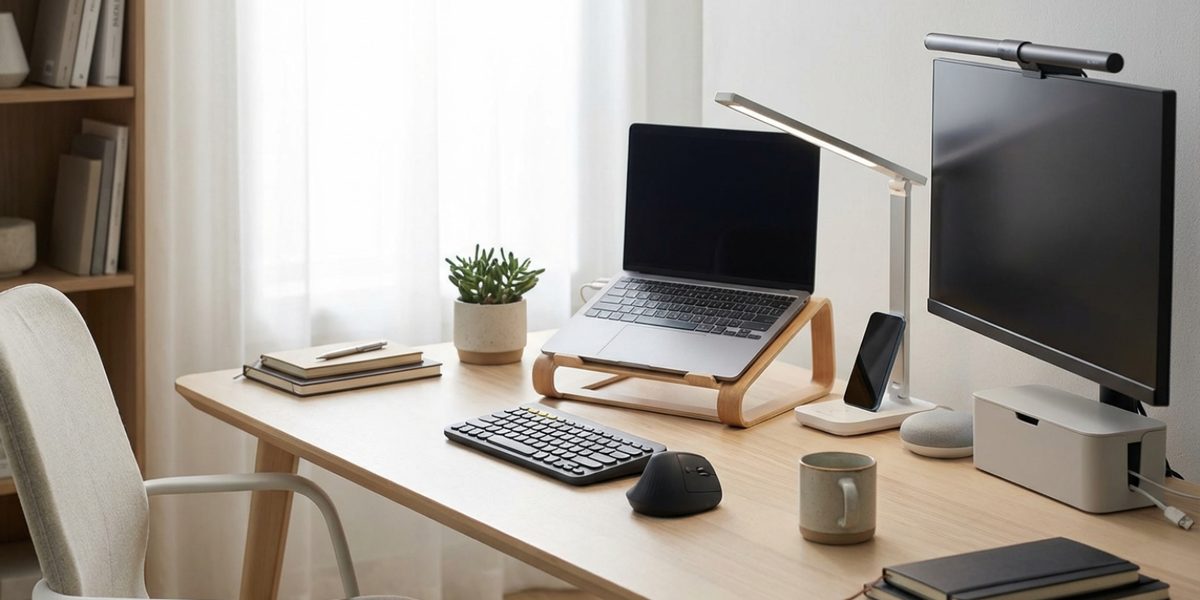
The home office wins on friction and control. There is no commute, which returns real hours to your week. You control temperature, noise, lighting, and interruptions, which matters enormously for deep, sustained concentration. Costs stay low, food is your own, and the flexibility to shift a load of laundry or meet a delivery folds life's logistics into the workday instead of stacking them after it.
Home also wins for certain personalities and job shapes. People whose work demands long uninterrupted stretches, whose meetings are frequent and confidential, or whose energy drains in busy environments often do their best work at home and experience shared spaces as a tax. If your home setup supports ergonomics and reliable connectivity, and your focus and mood are genuinely good, the burden of proof sits on any change.
What a Co-Working Space Actually Fixes
Co-working spaces are routinely marketed on amenities, but what they really sell is separation and ambient humanity. The commute, mild as it may be, creates a psychological boundary between home life and work life that many people cannot manufacture inside their own walls. The presence of other working people generates a low-grade social accountability that makes focus easier for those who drift when alone. And the incidental contact, such as small talk at the coffee machine or a nod from a regular, meets a social need that video calls demonstrably do not.
They also fix physical problems: the apartment too small for a desk, the household too loud for calls, the internet too flaky for meetings. For freelancers and founders, some spaces add a professional address, meeting rooms for clients, and a community that occasionally turns into referrals or collaborations. None of this is magic; it is infrastructure for the specific gaps a home cannot fill.
The Signs It Is Time to Try a Space
Certain patterns reliably indicate that home has stopped serving you, and they are worth naming honestly.
- Your workday has no edges: you start late, drift through the afternoon, and answer messages at night, without any block of true focus.
- Loneliness has moved from occasional to ambient, and weekends no longer repair it.
- Home itself distracts you, whether through chores, family, housemates, or the sheer sameness of the room.
- Your motivation responds strongly to environment, and you notice you work brilliantly from a library or cafe.
- Video calls have become logistically painful because of noise, space, or connectivity.
Two or three of these together are not a personal failing; they are a signal that your environment and your needs have drifted apart. Environments are cheaper to change than personalities, and a co-working trial is one of the easiest environmental experiments available.
The Signs You Should Stay Home, or Return
The traffic runs the other way too. If you find yourself commuting to a shared space only to sit in noise-canceling headphones all day, avoiding interaction and struggling to find a free phone booth for your meeting-heavy calendar, you are paying for a solution to a problem you do not have. If the membership fee stings every month, the commute eats the hours that once made remote work worthwhile, or your productivity measurably dipped after switching, the home office deserves another chance.
Some people also discover that what they actually needed was not a workspace but a routine: a morning walk that simulates a commute, a dedicated desk away from the bedroom, working hours with hard edges, and a standing social plan or two each week. If a few cheap home-side fixes would address your specific complaints, try them before signing anything.
Run It as an Experiment, Not a Commitment
The decision does not deserve agonizing; it deserves a trial. Most spaces offer day passes and monthly plans, so design a fair test: two to four weeks, your normal workload, and a handful of measures decided in advance. Track your deep work hours, how your energy feels at the end of the day, how meetings go, what you spend including transport and bought lunches, and how often you actually talk to anyone.
Guard against the novelty effect by weighting the final week more than the first, since any change feels productive for a few days. And test the right space: a quiet dedicated-desk area and a lively hot-desk floor are different products, and one bad fit does not condemn the whole category. At the end, compare against the same measures from a normal home week and let the data outvote the mood.
The Hybrid Most People Land On
The quiet secret of this debate is that the winning answer for many remote workers is both. A pattern of two or three co-working days for collaboration-heavy, energy-seeking work and the rest at home for deep focus captures most of each option's benefits at a fraction of the psychological cost. Flexible or part-time memberships make this affordable, and batching your meetings into co-working days makes each environment better at what it does.
Hybrids also flex with seasons of life. A stretch of intense solo work may pull you home for a month; a bout of isolation or a new project full of ambiguity may pull you into the space four days a week. Treating the split as adjustable, rather than an identity, is what keeps it working over years instead of months.
Budget and Practicalities Before You Sign
Before committing to any membership, do the unglamorous math. Add the fee, transport, parking, and the lunches you will inevitably buy, then weigh it against what it replaces and check whether your employer offers a stipend, since many do and few employees ask. Read the terms for notice periods, guest policies, meeting room allowances, and after-hours access. Visit at the hour you would actually work, not the hour of the sales tour, because a space at nine in the morning and the same space at two in the afternoon can be different worlds of noise and crowding.
If you are self-employed, check whether workspace costs are treated favorably at tax time where you live, and keep records either way. Small practicalities like a locker, bike storage, or decent coffee sound trivial and will decide whether you still show up in month three.
Final Thoughts
Home offices and co-working spaces are tools, not tribes. Home optimizes control, cost, and uninterrupted depth; a shared space buys boundaries, energy, and human ambient noise in the best sense. Read your own signals honestly, fix the cheap problems first, and let a measured trial settle what introspection cannot. Most importantly, keep the decision reversible and revisit it as your work and life shift, because the right answer this season may be the wrong one next. The point of remote work was never the room you sit in; it is having the freedom to choose the room that makes you best.