You bought a decent microphone, your internet is fine, and colleagues still say you sound like you are calling from the bottom of a well. The problem is almost certainly not your equipment. It is your room. Hard floors, bare walls, and big windows bounce your voice around before it reaches the microphone, and what arrives is a smeared blend of direct speech and its own reflections, the hollow, echoey quality that makes listeners strain and makes speakers sound distant. The fix is not studio foam and it is not expensive. It is soft, ordinary furnishings placed where the reflections happen, plus a few habits about where you sit and speak. Here is how room sound actually works, and how to fix yours with things that belong in a home anyway.
Why Rooms Echo: The Thirty-Second Physics
Sound leaves your mouth in all directions. Some of it travels straight to the microphone; the rest hits the floor, walls, ceiling, and window glass, and hard, flat surfaces reflect it back almost undiminished. Those reflections arrive at the microphone a beat later than your direct voice, and the microphone, unlike your brain, cannot ignore them. Layer enough reflections and you get reverberation: the bathroom sound, the empty-apartment sound, the calling-from-a-cave sound.
Soft, porous, irregular materials do the opposite: they absorb and scatter sound instead of bouncing it. This is why a furnished living room sounds warm while an empty one echoes, and why your voice sounds fine in a closet full of clothes. Fixing call audio, then, is mostly a redecorating problem: replace enough hard reflective surface with soft absorbent material, especially near where you speak, and the echo collapses. You can hear your progress with a simple test, clap once, sharply, and listen. A hard room answers with a ringing tail; a treated room answers with a dead thud. Clap before and after each change and let your ears keep score.
Start With the Floor: The Biggest Mirror in the Room
If your office has hardwood, laminate, or tile, the floor is the largest acoustic mirror you own, and it sits directly between your mouth and everything else. A single area rug changes a room's sound more than any other one purchase. Size and thickness both matter: a large rug beats a doormat-sized one, a thick pile beats a thin flatweave, and adding a rug pad underneath meaningfully increases absorption while keeping the rug in place.
Place it where the sound is, under and around your desk and chair, covering the stretch of floor between you and the door or the room's biggest hard expanse. Carpeted rooms start with this problem already solved, which is why the same setup can sound fine in one room of a home and terrible in another. If a proper rug is not in the budget yet, any soft layer helps: a folded blanket under the desk during calls is invisible on camera and audible in the result.
Windows and Walls: Curtains Are Acoustic Panels in Disguise
Glass is the most reflective common surface in a home, and offices tend to have a window right beside or behind the desk. Curtains fix this while doing their day job. The acoustic rules are simple: heavier fabric absorbs more, more fullness, curtains wider than the window, hung with generous gathering, absorbs more still, and lined or layered curtains beat single thin panels. Even when open, a stack of heavy fabric beside the window breaks up reflections; drawn during important calls, it effectively removes the glass from the room's acoustics.
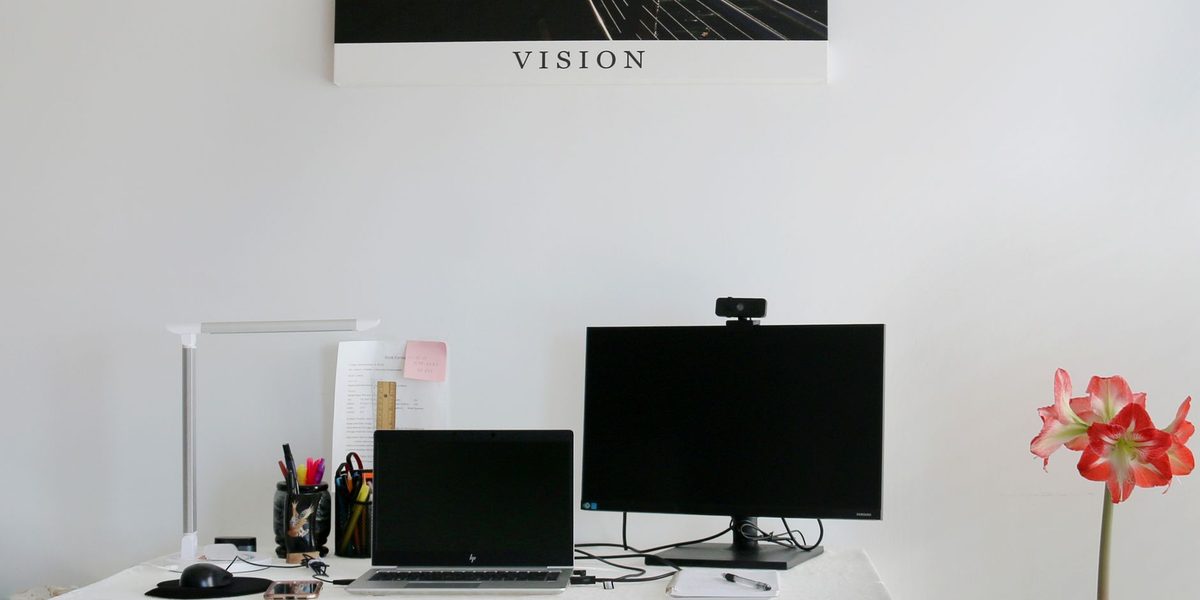
Bare walls respond to the same logic. Anything soft or irregular hung on them, a fabric wall hanging, a quilt, a canvas print, a cork board, absorbs or scatters what a blank painted surface would bounce back. Prioritize the wall directly behind you and the one directly in front of you, since sound reflecting off those makes the shortest, most audible round trips to your microphone. A wall-mounted bookshelf, loosely and unevenly filled, is a classic acoustic treatment wearing casual clothes: the varied depths of books scatter sound in all directions instead of returning it in one clean slap.
Furnish Against the Echo
Beyond the floor and windows, the room's overall furnishings decide its baseline sound. Sparse rooms ring; layered rooms absorb. Useful additions, roughly in order of impact:
- A fabric sofa, armchair, or upholstered headboard in or near the workspace absorbs a remarkable amount of low and mid range sound.
- Filled bookshelves, especially on large empty walls, both absorb and scatter.
- Cushions and throws, cheap, movable absorption you can pile strategically near your desk.
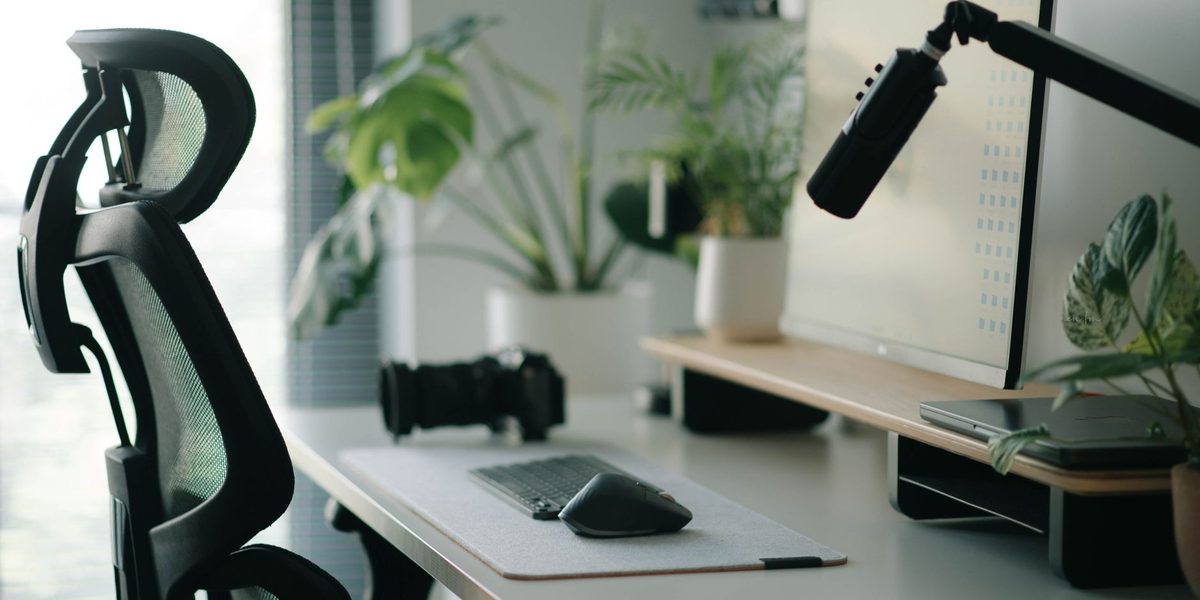
- Plants with dense foliage, modest absorbers, but they scatter reflections and improve the camera view at the same time.
- A closet left open during calls, hanging clothes are outstanding absorption, which is exactly why closet offices sound so good.
Notice that every item on the list is normal decor. A home office rarely needs purpose-built acoustic panels; it needs the furnishings an empty-feeling room was missing anyway. If you do add panels, or a DIY equivalent like a fabric-wrapped batt of insulation, place them at the first reflection points: the side walls roughly level with your head, plus the wall behind your monitor.
Microphone Habits That Beat Any Rug
Room treatment reduces echo; microphone technique reduces how much room the microphone hears in the first place. The ratio that matters is direct voice versus reflected voice, and distance controls it: a microphone close to your mouth picks up mostly you, while a laptop microphone an arm's length away picks up mostly room. This is why a modest headset almost always sounds better on calls than an expensive microphone across the desk, and why the single fastest audio upgrade is moving whatever microphone you have closer to your face.
Position yourself kindly too. Avoid speaking directly toward a large bare wall or window at close range, angle the desk so those surfaces sit beside you rather than dead ahead. Sitting near soft furnishings, with the open closet trick or a curtain at your back, quiets the reflections that reach the microphone from behind. And always wear headphones or earbuds on calls: speakers playing other people's voices into your microphone create the other kind of echo, the one your colleagues hear of themselves, which no rug can fix.
Quieting the Noise You Forgot You Had
Echo is only half of room sound; the other half is the steady noise floor your brain edits out and your microphone faithfully transmits. Do one silent-room audit: sit at your desk, stay quiet, and listen for the fan, the fridge through the wall, the ticking clock, the air vent, traffic through a single-pane window. Move or silence what you can, put the loud clock in a drawer, close the door to the kitchen, pause a nearby fan during meetings. Heavy curtains, a door draft-stopper, and a rug all do double duty here, muffling outside noise as well as inside echo. What remains, most meeting software suppresses reasonably well, and noise suppression works dramatically better on a quiet, treated room than on a loud reflective one.
Final Thoughts
Sounding clear on calls is not an equipment problem until it is first a room problem. Soft floor, dressed windows, something absorbent on the walls before and behind you, a furnished rather than sparse room, and a microphone near your mouth, that combination turns bathroom acoustics into a voice that sounds close, warm, and easy to listen to. Use the clap test to find your worst reflections, fix the floor first, and let ordinary furnishings do the acoustic work. Your colleagues will not know what changed. They will just stop asking if you can move closer to the microphone.