The hardest part of working from home is rarely the work. It is the way work seeps into everything else: the laptop glowing on the kitchen table at dinner, the email checked from bed, the low hum of obligation that never quite switches off because the office never closes, it just sits there in the corner. Commutes were tedious, but they performed a service nobody appreciated at the time: they told your brain, unmistakably, when work began and ended. Recreating that separation at home takes deliberate effort, but it does not require a spare room or a renovation. It requires drawing lines, physical, visual, and behavioral, and then defending them.
Why Your Brain Needs a Boundary
Environments carry associations. When one space hosts both spreadsheets and Sunday movies, the associations blur in both directions: you feel a tug toward the couch during work hours and a tug toward the inbox during rest. The result is the worst of both, distracted work and unrestful leisure. People who struggle to focus at home and people who struggle to stop working at home are usually suffering from the same missing ingredient: a clear signal about which mode they are in.
Separation rebuilds that signal. When work reliably happens in one defined place, under one set of conditions, your brain learns the pattern. Sitting down there starts to feel like starting; leaving starts to feel like leaving. Every technique in this article is really just a way of making that pattern stronger and the edges of it sharper.
Claim a Dedicated Spot, However Small
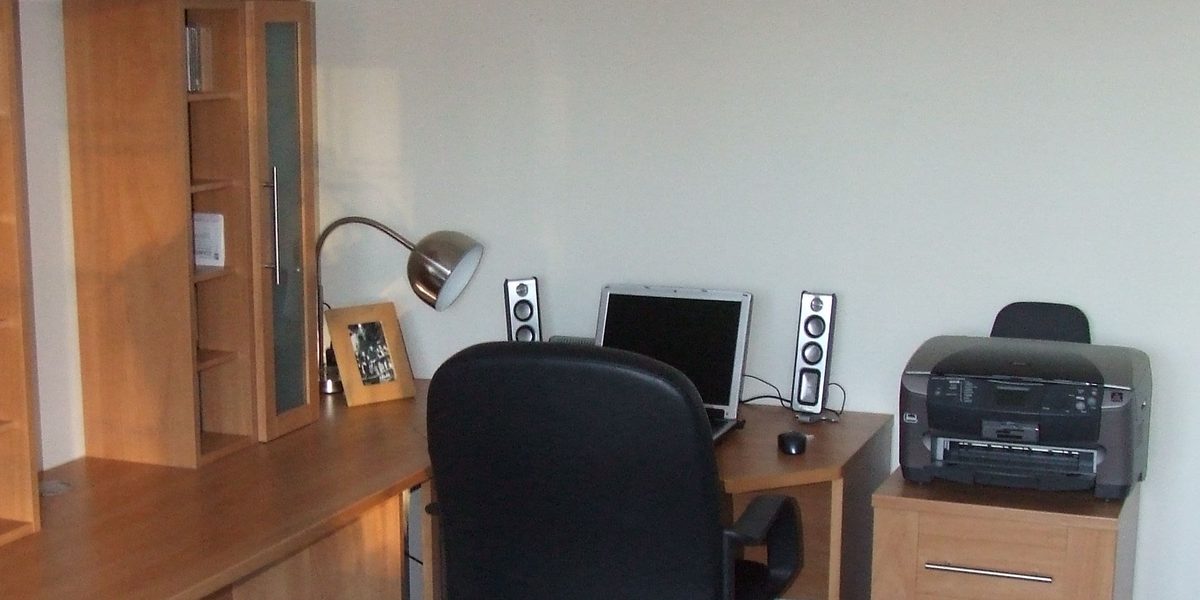
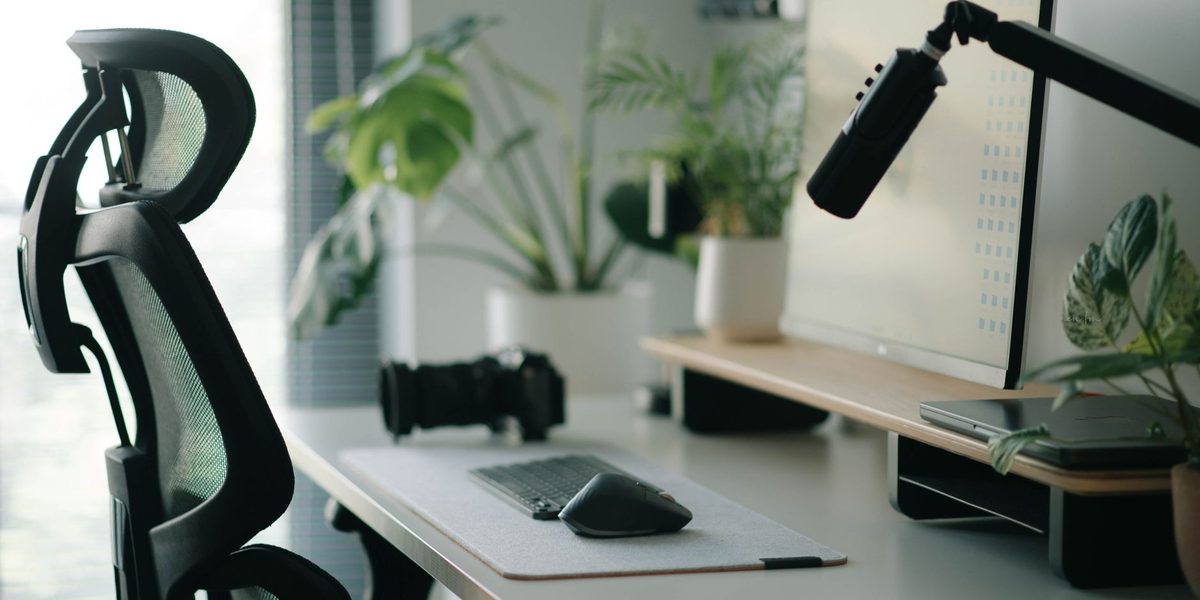
The gold standard is a separate room with a door, but most homes cannot spare one, and the good news is you do not need it. What you need is a spot that is only for work. A desk in the bedroom corner, a table in the hallway alcove, one specific end of the dining table with its own chair, any of these works if it is consistent and exclusive. The failure mode is nomadic working, drifting from couch to bed to counter, which teaches your brain that everywhere is the office and therefore nowhere is off duty.
Position matters more than square footage. If you can, face your desk away from the most tempting distractions and, just as importantly, arrange it so you cannot see the desk from the places you relax. A workstation staring at you from across the living room all evening is a boundary violation in furniture form. Angling the desk, tucking it behind a sofa, or placing it in a corner you do not face at night makes a surprising psychological difference.
Build Visual Walls Without Building Walls
When one room must serve two lives, visual dividers do the work of drywall at a fraction of the cost. The goal is to make the work zone read as a distinct place, entered and exited, rather than a corner of the same continuous room.
- A folding screen or room divider is the classic solution: it hides the desk after hours and can be moved in seconds.
- An open bookshelf placed perpendicular to the wall creates a nook, provides storage, and still lets light through.
- A curtain on a ceiling track or tension rod closes off an alcove completely, which is especially satisfying at the end of the day.
- A rug under the desk area defines the zone underfoot, a boundary you feel every time you cross it.
- Distinct lighting, such as a task lamp that is only on during work hours, marks the zone in time as well as space.
Even color can carry the message: a work corner painted or decorated differently from the surrounding room reads as its own territory. The specific method matters less than the consistency. Pick a boundary and let it mean something.
Make Work Disappear at Closing Time
Separation is not just about where work happens; it is about where work goes when it stops. A workspace that can be shut down, covered, or folded away gives you a physical closing ritual, and closing rituals are the single most effective habit for ending the workday cleanly. If you work at a dedicated desk, that might mean closing the laptop, sliding the chair in, and switching off the task lamp. If you work at a shared table, it means actually packing up, laptop into a drawer or a bag, papers into a folio, surface cleared, so that dinner does not happen next to your unfinished tasks.
People in small spaces often discover that fold-away furniture enforces this better than any willpower: a desk that folds against the wall or a cabinet that closes over the workstation makes the end of the day a physical act. However you do it, the principle is the same. Work should have a container, and the container should close.
Use Rituals as a Substitute Commute
Physical boundaries work best when paired with behavioral ones. A transition ritual, five to twenty minutes of the same actions at the start and end of each workday, recreates the psychological function of a commute. In the morning, that might be getting fully dressed, making coffee, and taking a short walk around the block before sitting down at the desk. In the evening, it might be writing tomorrow's task list, shutting everything down, changing clothes, and stepping outside briefly before re-entering home mode.
The content of the ritual is flexible; the consistency is not. Done daily, the sequence becomes a switch your brain flips automatically. Many remote workers find the end-of-day ritual matters more than the morning one, because starting work is rarely the problem. Ending it is. Give the day a hard edge: a set time, an alarm if needed, and a sequence of actions that always means finished.
Draw the Digital Boundary Too
A perfectly separated room accomplishes little if work follows you out on a screen in your pocket. Digital separation deserves the same deliberateness as physical separation. Keep work accounts out of your personal phone if your job allows it, or at minimum silence work notifications outside working hours. Use separate browser profiles or user accounts so that personal computer time does not begin with a view of your work inbox. If you use one computer for everything, closing every work application at the end of the day is part of packing up.
Communicate the boundary as well as building it. Colleagues learn your availability from your behavior; replying at all hours trains them to expect it. Predictable hours, an honest status message, and a little patience while expectations reset will do more for your evenings than any room divider.
Get the Household on Board
If you live with others, your zones only hold if everyone recognizes them. Make the signals explicit rather than hoping family or roommates infer them: a closed door means in a meeting, headphones on means focused, the desk area is off-limits for other clutter, and, in the other direction, when you leave the zone you are actually present, not half-answering messages. Households with children often benefit from concrete markers, a sign, a light, a specific rule, because abstract boundaries are hard for kids to track. The bargain runs both ways: the clearer you are about when you are working, the more credible you are when you say you are done.
Final Thoughts
Separation between work and home is not a luxury for people with spare rooms. It is a set of habits anchored to physical cues: one consistent spot that is only for work, a visual boundary around it, a way to make work vanish at closing time, a ritual that marks the transition, and digital rules that keep the office out of your pocket. Start with whichever line is easiest to draw, and defend it for a few weeks until it feels normal. The point of working from home was never to live at work, and with a few deliberate boundaries, you will not.