Noise is the invisible flaw in many otherwise good home offices. The desk is comfortable, the light is fine, and yet the dishwasher, the neighbor's dog, and the television in the next room keep punching holes in your concentration and your calls. True soundproofing, the kind studios use, means construction: new walls, insulation, and sealed everything. But most home workers do not need silence; they need enough quiet to think and to sound professional on a call. That goal is achievable with modest money and a weekend of effort, if you spend both in the right places.
Know the Two Problems You Are Solving
What people call noise trouble is really two separate problems. The first is sound getting in or out: voices through a wall, footsteps overhead, street noise through a window. The second is sound bouncing around inside the room: the harsh, echoey quality that makes a sparse office sound like a stairwell and makes your voice ring on calls. Blocking sound requires mass and sealed gaps. Taming echo requires soft, absorbent surfaces inside the room.
The distinction matters because the products aimed at each problem do almost nothing for the other. Foam panels on the wall will noticeably improve how your room sounds on a call, but they will not stop you from hearing the lawnmower outside. Diagnose first: if the problem is noise from elsewhere, focus on gaps and mass; if recordings of your voice sound hollow and reverberant, focus on absorption. Most offices benefit from a bit of both.
Start With the Door, Because Sound Is Like Water
Sound leaks through openings the way water does, and in nearly every home office the biggest opening is the door. Interior doors are often lightweight and hollow, hung with a generous gap underneath. Sealing that perimeter is the single highest-value soundproofing move available, and it is cheap. Apply adhesive weatherstripping around the frame so the closed door presses against a seal, and fit a door sweep or draft stopper to close the gap at the floor.
If noise still pours through, the door panel itself is likely the weak point. Hanging a heavy moving blanket or thick curtain over the door on a rod adds meaningful mass for very little money, and it can be pushed aside when you are not working. Replacing a hollow door with a solid one is the pricier upgrade, worth considering only after the cheap fixes have proven insufficient.
Add Mass and Softness to the Weak Surfaces
After the door, work out which surface the worst noise comes through, and make that surface heavier or cover it with absorbing layers. Budget options are more effective than they look.
- A packed bookshelf against a shared wall adds a thick, irregular layer of mass that muffles neighbor noise surprisingly well.
- Heavy curtains, ideally lined and hung wide and high, soften window noise and absorb room echo at the same time.
- A large rug with a thick pad quiets footfall in the room and reduces sound passing through the floor.
- Moving blankets or thick quilted hangings on a problem wall are the unglamorous budget champion; fabric wall hangings do the same job more decoratively.
- Draft stoppers and weatherstripping on windows seal the small gaps that let in more street noise than the glass itself.
Notice the pattern: everyday soft furnishings, deployed deliberately, deliver most of what specialty products promise. A room with full bookshelves, curtains, and a big rug is already halfway soundproofed, which is why furnished rooms always sound calmer than empty ones.
Tame the Echo Inside the Room
If your voice sounds distant and boomy on calls, the room itself is the problem, and the fix is absorption on the surfaces your voice bounces between. Hard parallel surfaces, bare wall facing bare wall, are the main culprits. You do not need to tile the office in foam; covering a modest portion of the reflective surfaces, especially the wall behind you and the one facing you, produces a dramatic improvement.
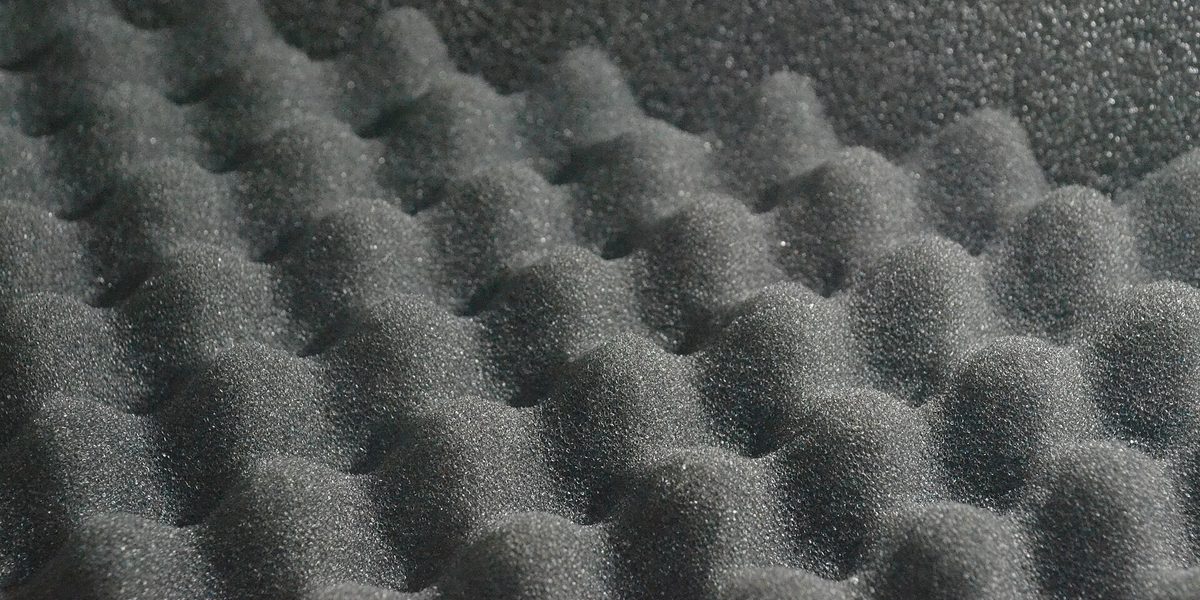
Acoustic foam or fabric-wrapped panels are affordable and effective, but so are the domestic alternatives: a canvas print with soft batting behind it, a felt pinboard, open shelves broken up with books and objects, even a fabric sofa. Aim for a mix of soft materials at roughly head height around your seating position, since that is where your voice and your microphone live. A quick test: clap once in the room. A sharp, ringing slap means more absorption needed; a dull, quick thud means you are done.
Quiet the Noise You Are Creating
Some office noise is homegrown, and silencing it is free or close to it. A keyboard on a desk mat is quieter than one on bare wood. A chair rolling on a rug is quieter than casters on hardwood. Fans and machines placed on foam pads stop transmitting hum into the desk and floor. If your microphone picks up the room, moving it closer to your mouth lets you speak more softly and drops the room noise on the far end of the call more than any panel would.
Think about placement within the room, too. Moving the desk away from the shared wall, pointing your speakers away from it, and keeping the noisiest equipment near the most soundproofed corner all reduce what escapes to the rest of the household. Soundproofing works in both directions, and the family appreciates the outbound half as much as you appreciate the inbound half.
Mask What You Cannot Block
Even a well-treated room will let some noise through, and the last budget line of defense is masking: adding a smooth, steady background sound that makes intermittent noises less noticeable. A fan, an air purifier, or a white-noise machine or app raises the room's sound floor so a door slam or bark stands out far less against it. Many people find broadband noise, or simple ambient soundscapes, dramatically improves their ability to ignore a loud household.
For focused work, sealed or noise-cancelling headphones are the personal version of the same idea and often the best money spent in the whole project. They will not help how you sound to others on a call, but for reclaiming concentration in an imperfect room, masking plus headphones covers the gap the walls leave.
Spend in the Right Order
Budget soundproofing rewards sequence. Seal the door and window gaps first, since gaps undo everything else and cost the least to fix. Add mass and soft furnishings to the worst surface next, then treat the interior echo around your desk, then add masking sound for whatever remains. Test after each step by simply working for a few days; you may find you can stop earlier than expected.
Resist the temptation to start with a wall of foam because it looks the part. Foam panels on a wall next to an unsealed door are decoration. The unglamorous rubber strip around the door frame is doing the real work, which is a fair summary of budget soundproofing in general: the effective fixes are rarely the photogenic ones.
Final Thoughts
A quiet home office does not require a contractor. Seal the openings, put mass and softness where the noise enters, absorb the echo where you sit, quiet your own equipment, and mask the remainder. Each step is cheap, reversible, and renter-friendly, and together they compound into a room where you can think in a noisy home and sound composed on every call. Silence may be out of budget for most of us, but quiet enough almost never is.