Office chairs are one of the most confusing purchases in a home office. Prices span an enormous range, every listing claims to be ergonomic, and the spec sheets read like aircraft manuals. Yet the qualities that determine whether a chair will still feel good at hour six are surprisingly few, and several heavily marketed features barely matter at all. Whether you are buying new, buying used, or deciding if your current chair is the problem, here is what genuinely counts in an office chair, and what you can comfortably ignore.
Fit Comes Before Features
The best chair is the one shaped like you. Before any feature list, check the fundamental dimensions. Seat height must adjust low enough and high enough that your feet sit flat on the floor with knees at roughly a right angle; taller and shorter people are routinely failed by chairs built for the mythical average. Seat depth matters just as much: sitting fully back, you should fit two or three fingers between the seat edge and the backs of your knees. Too deep and you slouch forward off the backrest; too shallow and your thighs lose support.
Width, weight rating, and backrest height round out the fit check. None of this appears in glamour shots, which is why sitting in a chair, or at least studying its measurements against your own, beats any amount of review reading. A modest chair that fits you well will outperform a prestigious one that fits you badly every single day.
Adjustability Is the Real Ergonomics
A chair earns the word ergonomic through its range of adjustment, because no fixed shape suits every body and every task. The adjustments that pay for themselves daily are seat height, seat depth, lumbar support height, armrest height, and recline tension. Each one exists to bring the chair to your body rather than forcing your body to negotiate with the chair.
- Seat height aligns your legs and sets the baseline for your whole desk setup.
- Seat depth, via a sliding seat pan, lets the backrest actually reach your back.
- Adjustable lumbar support meets the natural curve of your lower spine where it is, not where a designer guessed.
- Armrests that move up and down keep shoulders relaxed; ones that also shift inward and outward keep elbows at your sides.
- Recline tension makes leaning back feel supported instead of like falling.
When comparing two chairs, count the adjustments you would truly use and ignore the total number advertised. A chair with five meaningful adjustments beats one with a dozen fiddly ones that lock into place and are never touched again.
Lumbar Support: Essential, but Easily Faked
Lower-back support is where cheap chairs most often cut corners while still using the right vocabulary. A molded plastic bump or a fixed foam bulge is not lumbar support if it hits the wrong part of your spine, and for many bodies it will. Genuine support either adjusts in height and depth or flexes dynamically to track your back as you move. When you sit fully back, you should feel gentle, even contact along the curve of your lower spine, with no single pressure point doing all the work.
Test it by sitting for more than a minute, because a firm lump can feel pleasant at first and become intolerable by the end of a long call. If a chair you already own falls short here, a separate lumbar cushion can rescue it, but treat that as a patch. A backrest that fits properly in the first place remains the better solution.
Recline Is a Feature, Not a Flaw
Many people buy rigidly upright chairs on the theory that leaning back is lazy. In practice, a smooth, supported recline is one of the most valuable things a chair can offer, because opening the angle between torso and thighs periodically unloads your spine and shifts work among different muscles. The mechanism to look for lets the backrest move with resistance you can tune to your weight, and ideally lets the seat tilt slightly in concert so you are not left perched on the front edge while the back drops away.
A lockable upright position is useful for focused typing, but the win is fluid movement between postures. A chair that rocks with you all day quietly does the job that posture reminders and expensive gadgets try to do: it keeps you from freezing in one position for hours.
Materials and Build: Where Longevity Lives
Comfort on day one is easy; comfort in year five is a materials question. Seat foam is the most common failure point, since cheap foam compresses into a hard pancake within a year or two of daily use. Dense, resilient foam or a quality suspended mesh seat holds its shape far longer. Mesh backs breathe well and suit warm rooms; padded backs feel plusher and quieter. Neither is objectively superior, so let your climate and preference decide.
Beneath the upholstery, look for a sturdy base, smooth-rolling casters suited to your floor type, and a cylinder and mechanism that feel solid rather than wobbly. A long warranty is one of the most honest signals in the entire category, because a manufacturer that guarantees a chair for many years has priced in the cost of it actually lasting. This is also why a well-made used chair is often a smarter buy than a new one at the same price.
Features That Matter Less Than the Marketing Says
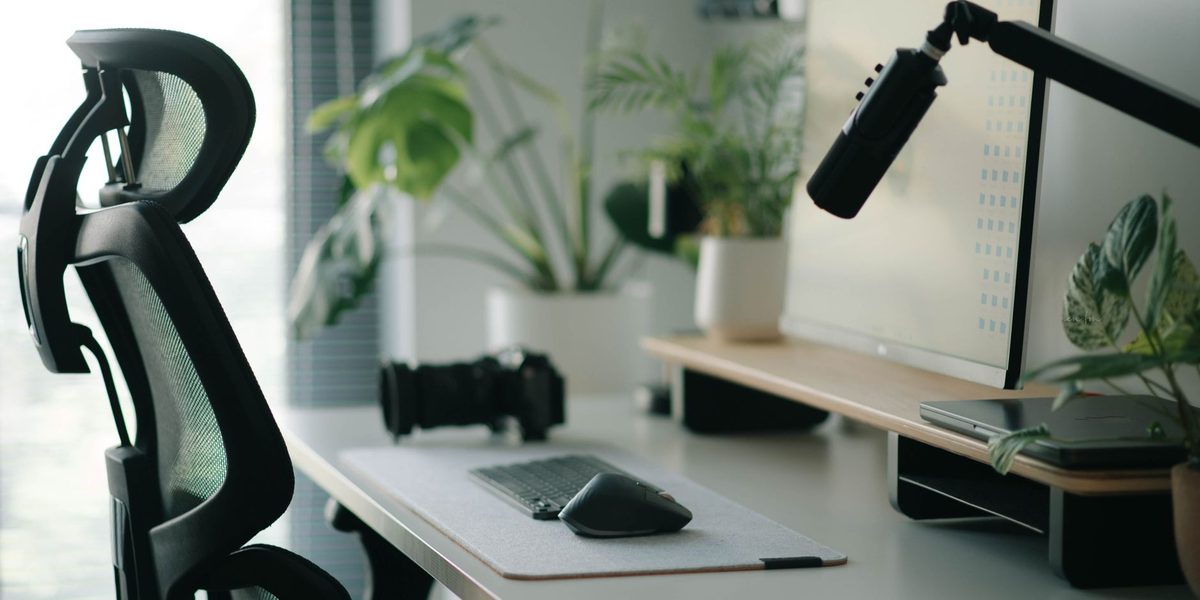
Several showy features contribute little to daily comfort. Headrests are genuinely useful mainly for people who recline deeply and often; for upright work your head should balance over your spine, not rest on a pad. Aggressive sculpted side bolsters look sporty but restrict how you shift and cross your legs, and shifting is healthy. Massive pillow-top padding often masks poor structure and bottoms out with use.
Racing-style aesthetics, built-in speakers, and exotic adjustment counts belong in the same bucket: fine if you like them, irrelevant to whether your back hurts. Even the most premium chair cannot fix a desk at the wrong height or a monitor that pulls your neck forward, so budget attention for the whole workstation rather than expecting one purchase to carry it.
How to Evaluate a Chair Before Committing
Whenever possible, audition a chair with real work, not a showroom wiggle. Sit for twenty minutes or more, in your normal posture, doing something like what you do all day. Run every adjustment through its full range and notice whether the controls are reachable while seated; adjustments you must stand up to operate will rarely be used. Check that the chair holds its settings instead of sighing slowly downward.
If you are buying online, favor sellers with generous return windows and treat the first two weeks as the true test. Note how you feel at the end of each workday, not the beginning. A chair that disappears from your awareness by mid-afternoon is succeeding; one you keep noticing is telling you something.
Final Thoughts
Strip away the marketing and an office chair has one job: to fit your body, support its natural curves, and move with you through thousands of small posture changes a day. Fit first, meaningful adjustability second, honest lumbar support and a smooth recline third, durable materials underneath it all. Judge chairs on those terms and the confusing marketplace shrinks to a short list quickly, at almost any budget. Your back keeps score for years, so let it, rather than the spec sheet, make the final call.