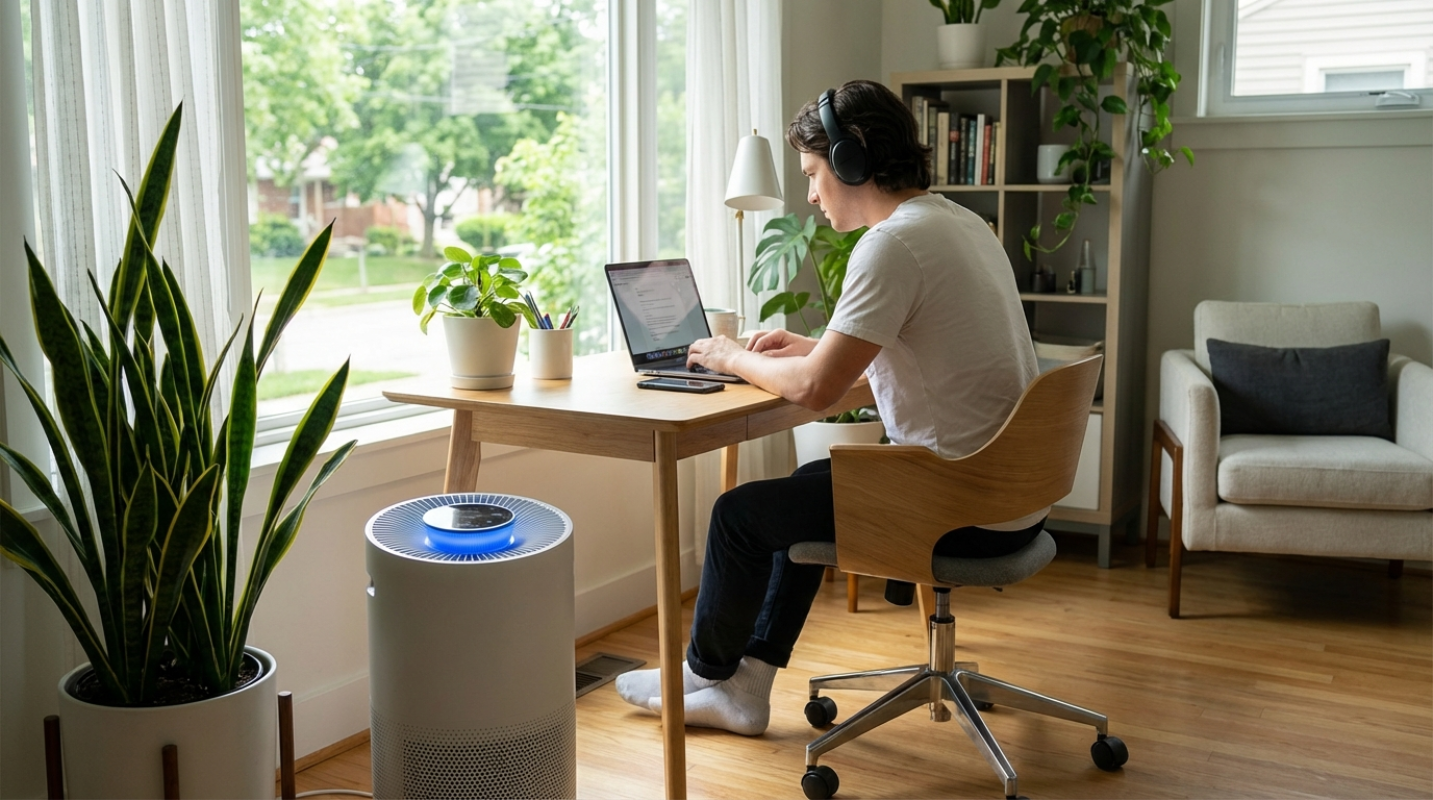
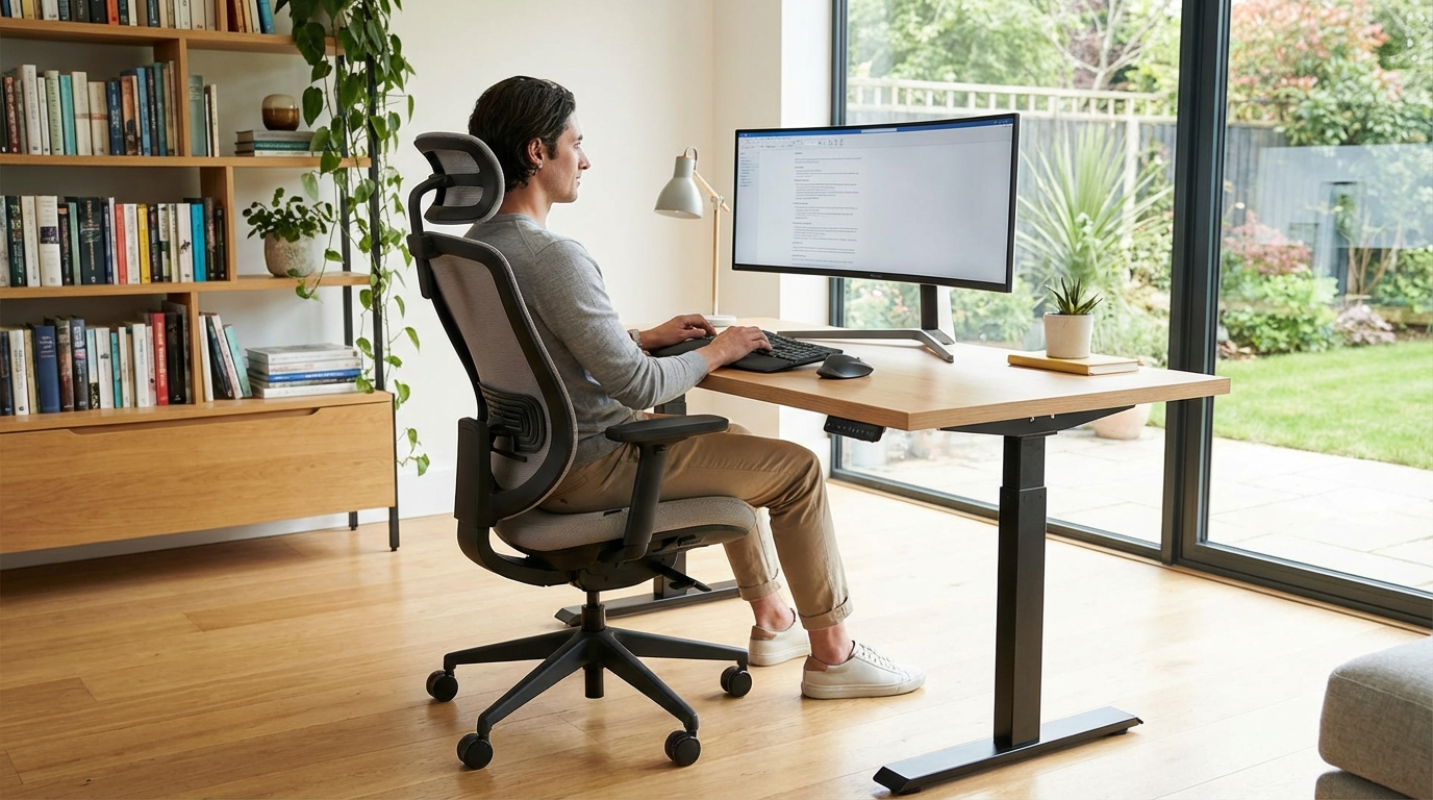
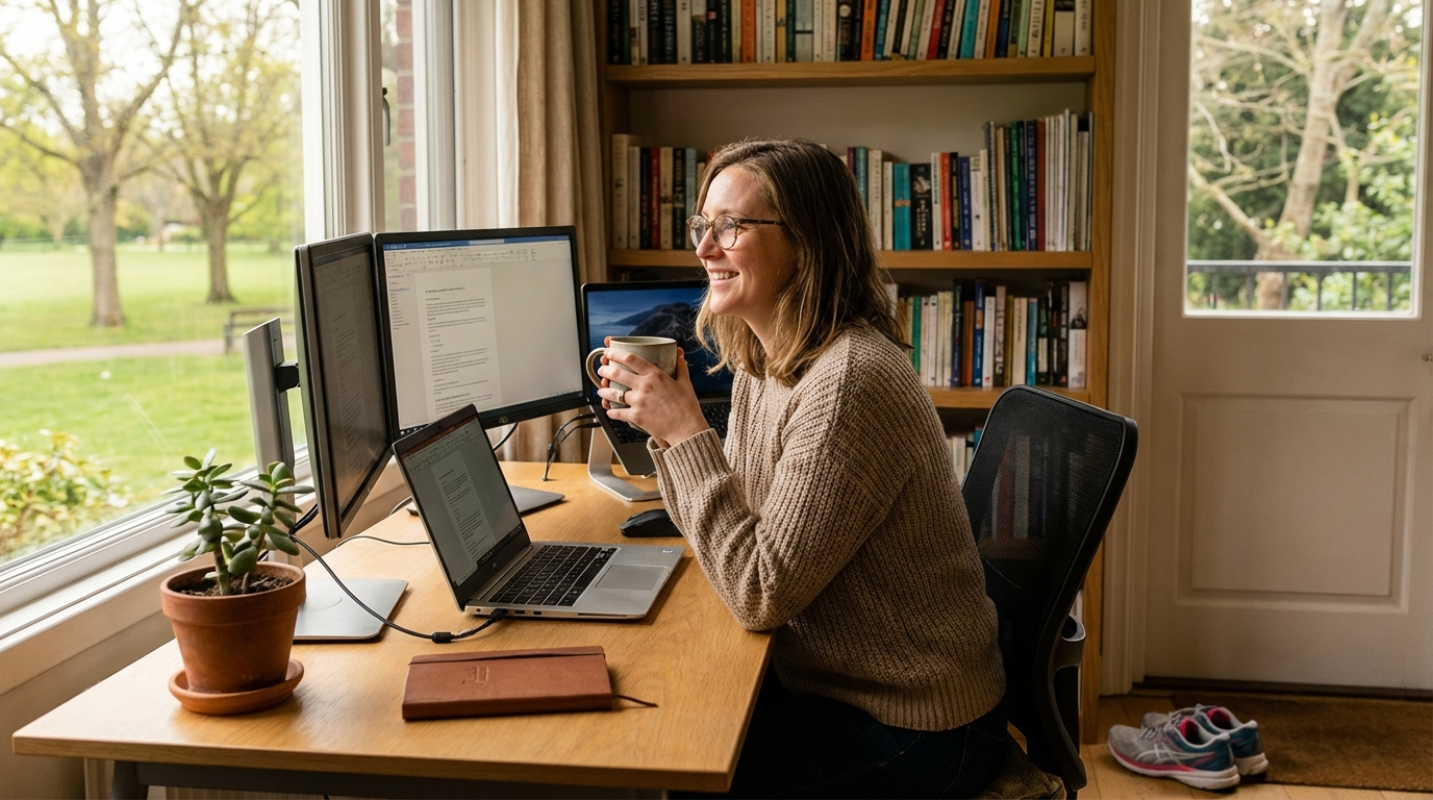
 (Image source: Gemini)
 The remote revolution promised us freedom, but for many, it just traded a physical office for a digital one that never actually closes. The reality of the modern remote career is an always-on culture that blurs the lines between your living room and your workstation. We are living on a digital tightrope. On one side is the need to be visible and productive in a virtual environment. On the other is the desperate need to protect our physical and mental health. Most of us are leaning way too far toward the screen side.
Achieving true remote work success requires a shift in how you view your tools. You have to be the boss of your digital boundaries, not a servant to your notifications. It takes proactive and confident management to stay well in this environment. We are going to look at why this screen time burden is so heavy, the practical architectures you can build to fix it, and the mindset shifts you need to make to stay in the game for the long haul.
The Hidden Costs of Unmanaged Screen Time
Remote and hybrid professionals are carrying a massive digital burden. Recent data shows that remote workers now average seven to nine hours of screen time per day for work alone. When you add in personal phone use and evening streaming, that number skyrockets. A report from a few years back found that employees were clocking nearly 96 hours of screen time per week. That is more than five full days spent staring at pixels.
This isn't just a matter of tired eyes. It is a productivity killer. Have you ever noticed how hard it is to focus after bouncing between Slack, email, and a spreadsheet? That is context switching fatigue. Every time a notification pulls you away, it can take up to 23 minutes to get back into a deep state of focus. We are losing hours every week just trying to remember what we were doing when that "quick" message popped up.
Then there is the physical toll. Digital eye strain, or Computer Vision Syndrome, is now a primary health complaint for remote workers. About 43 percent of professionals say their eye health has worsened recently, and there is a direct link between that strain and mental health. When your body feels fatigued, and your eyes are burning, your stress levels naturally rise. It is a cycle that leads straight to burnout if you don't break it.
Architectures for Digital Breaks
You can’t manage your screen time with willpower alone. You need structure. Just like building a house requires a solid framework, your workday benefits from well-designed routines instead of hoping for the best.
The 20-20-20 rule helps prevent eye strain: every 20 minutes, look at something 20 feet away for 20 seconds. Set a timer or use a browser extension to build this simple habit into your routine.
- Establish "Device-Free" Zones: Designate areas like the bedroom or dining table where screens are not allowed. This physical boundary protects your rest and social time from digital distractions.
Focus blocks like the Pomodoro technique (25 minutes on, 5 minutes off) work best when your breaks are screen-free. Skip checking your phone, and instead stand up, stretch, or look outside to reset. How you end your day matters too. Use an analog transition, like a walk, a quick stretch, or cooking, to signal your brain that work is over, and rest has begun.
Setting Boundaries and Mastering Disconnection
If your laptop lives on the kitchen table, you’re always in work mode. Create a clear workspace, even in a small apartment. Use a dedicated spot or put your work gear away at night. Keeping work out of sight helps your mind truly disconnect.
Set clear after-hours boundaries, no Slack or email after 6 PM, and stick to them. Most notifications can wait until morning. Protecting your off time makes you more productive and refreshed for the next day.
- Try a "Fake Commute": End each workday with a short walk or ritual that marks the shift from work to personal time.
- Remove Work Apps From Devices: Delete work-related apps from your personal phone to separate work from downtime.
Use Do Not Disturb mode proactively. Set your phone to enter focus mode during deep work and sleep mode an hour before bed. Shutting down screens at least 60 minutes before sleep helps your brain reset and improves sleep quality.
Wellness Beyond the Desk
Your body wasn't designed to sit in a chair for eight hours staring at a glowing rectangle. Ergonomics experts recommend a sit-stand-move cycle. This means changing your position every 30 minutes. Even standing for just 15 minutes every hour can reduce the pressure on your neck by up to 400 percent.² If you have the option, try walking meetings for calls where you don't need to be looking at a screen.
Awareness is a great antidote to screen fatigue. You don't need a 30-minute meditation session. Just two minutes of deep breathing between meetings can lower your heart rate and clear the mental fog. It is about reclaiming your attention from the devices that are trying to steal it.
Finally, you have to be your own advocate. If your company has back-to-back virtual meetings that are draining the life out of you, speak up. Many organizations are moving toward no-meeting days or asynchronous communication to fight Zoom fatigue.
Owning Your Digital Environment for a Growing Remote Future
Balance isn't something that just happens to you. It is an active choice you make every single day. In the remote world, nobody is going to come to your desk and tell you it is time to go home or take a break. You have to be the one to draw the line in the sand.
Prioritizing your wellness isn't a distraction from your career. It is the foundation of it. If you don't manage your screen time now, you are needlessly borrowing energy from your future self at a very high interest rate. Eventually, that debt comes due in the form of burnout or health issues.
So, here is a challenge for you. Don't just read this and move on to the next tab. Pick one boundary today and implement it immediately. Maybe it is the 20-20-20 rule, or maybe it is putting your phone in another room at 8 PM. Whatever it is, take ownership of your digital environment. Your future self will thank you for it.
This article on TheDigitalDreamers is for informational and educational purposes only. Readers are encouraged to consult qualified professionals and verify details with official sources before making decisions. This content does not constitute professional advice.