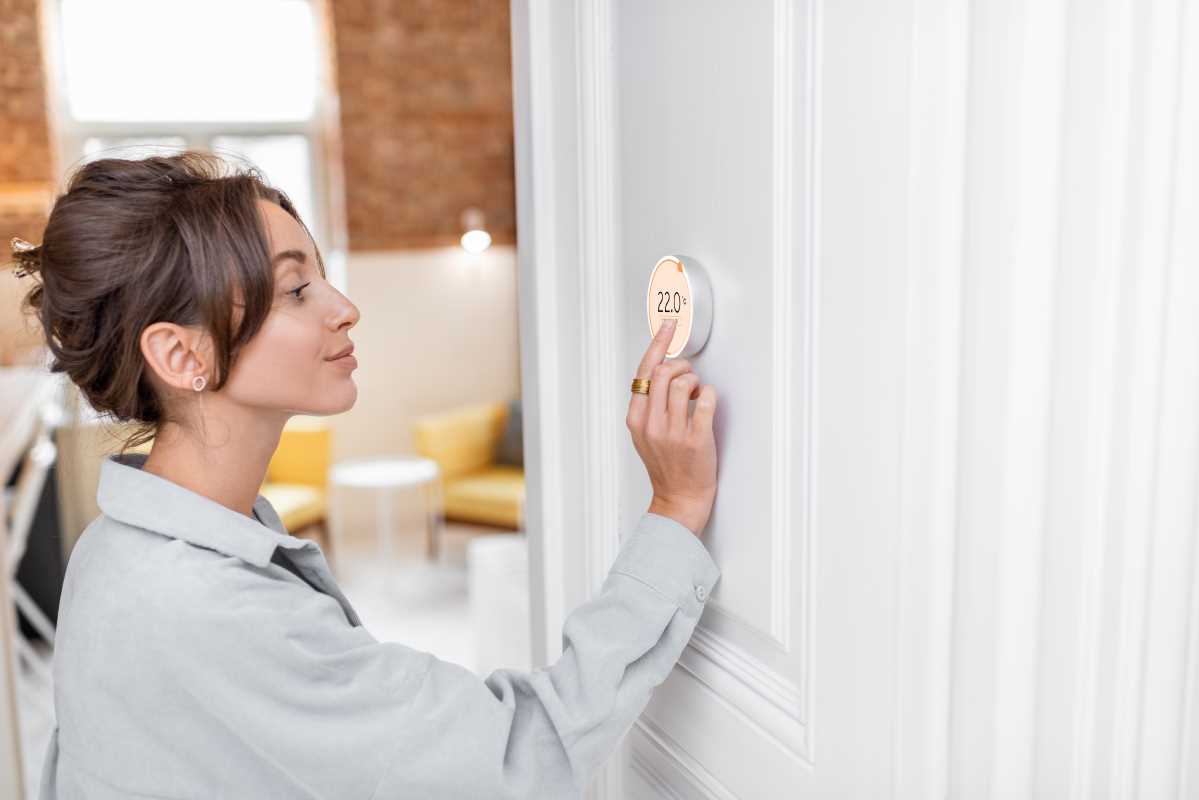
Your old thermostat is probably just a beige box on the wall that you poke when you're too hot or too cold. It does its job, but it isn't very bright. It follows commands without thinking about your wallet or your actual comfort. A smart thermostat changes the game completely by learning your habits and anticipating your needs. It automates your home's heating and cooling system to save you money without you even noticing a change in temperature. We are going to explore how these devices work, what features you should look for, and how they pay for themselves over time. Let's make your home's climate control work for you, not the other way around.
What Makes a Thermostat "Smart"?
A traditional thermostat is a simple switch. You set a temperature, and it tells your HVAC (Heating, Ventilation, and Air Conditioning) system to run until it hits that number. It has no idea if you're home, asleep, or on vacation. A smart thermostat is a mini-computer that connects to your Wi-Fi. This connection unlocks a world of intelligent features that old thermostats can't touch.
Smart thermostats use algorithms, sensors, and internet connectivity to make decisions. They can learn your routines, check the local weather forecast, and adjust the temperature based on whether you're home or away. You can control them from your phone, no matter where you are. This level of control and automation is what separates them from basic programmable models.
Learning Your Habits
The signature feature of most high-end smart thermostats is their ability to learn. During the first week or two, you adjust the temperature as you normally would. You turn it down when you leave for work, up when you get home, and down again when you go to bed. The thermostat tracks these changes.
After this learning period, it creates a custom schedule based on your behavior. It sees that you leave around 8 AM every weekday and automatically lowers the temperature to save energy. It knows you usually get home around 6 PM, so it starts warming or cooling the house shortly before you arrive. This ensures you walk into a comfortable home without wasting energy all day. You don't have to program anything because it does the work for you.
Geofencing
Geofencing is a feature that uses your smartphone's location to control your HVAC system. You create a virtual "fence" around your home. Your smart thermostat knows when your phone crosses this boundary.
As you drive away from your house, the thermostat recognizes you've left the geofenced area and automatically switches to an energy-saving "Away" mode. As you head back home, it senses you're approaching and starts adjusting the temperature to your preferred "Home" setting. This is more accurate than a fixed schedule. It accounts for days you come home early or leave late, ensuring you never waste money heating or cooling an empty house.
Room Sensors
Most homes have that one room that is always hotter or colder than the rest. Your thermostat is usually in a central hallway, so it only knows the temperature of that specific spot. It has no idea that the upstairs bedroom is an oven in the summer.
Smart thermostats solve this problem with remote room sensors. You can place these small, wireless sensors in different rooms throughout your house. You can then tell the thermostat to prioritize a specific room's temperature. For example, at night, you can tell it to make sure the bedroom is exactly 68 degrees, ignoring the temperature in the unused living room. This delivers targeted comfort where you need it most.
Energy Reports
A major benefit of a smart thermostat is the data it provides. Through the companion app on your phone, you get detailed energy reports. These reports show you exactly how many hours your HVAC system ran each day.
You can see how your usage compares to last month or last year. The app will often provide insights, like telling you that a recent heatwave caused your AC to run 30% more than usual. Some thermostats will even give you tips on how to save more, such as suggesting a slightly different temperature setting. This information empowers you to make smarter choices about your energy consumption.
Integration with Your Smart Home
Smart thermostats don't operate in a vacuum. They can connect with other smart devices in your home, like voice assistants (Amazon Alexa, Google Assistant) and smart lighting systems.
Voice Control
Connecting your thermostat to a voice assistant is incredibly convenient. You can change the temperature without getting off the couch. Simply saying, "Hey Google, set the thermostat to 72 degrees," is all it takes. This hands-free control is a small luxury that you quickly get used to.
Advanced Automation
Deeper integrations can unlock even more savings and comfort. Some systems allow you to link your thermostat to smart ceiling fans. When the AC kicks on, the ceiling fans can start automatically to help circulate the cool air more efficiently. This allows you to set the AC a few degrees higher without feeling any warmer, saving significant energy.
Choosing the Right Smart Thermostat
The market has several great options, but a few brands consistently stand out for their features and reliability.
Google Nest Learning Thermostat
This is the device that made smart thermostats famous. Its main selling point is its learning algorithm. The sleek, circular design with its high-resolution display is also a major draw. The Nest app is user-friendly and provides excellent energy reports. It's a fantastic choice for people who want a "set it and forget it" experience.
ecobee Smart Thermostat
Ecobee's biggest advantage is its remote room sensors, which come included in the box. While Nest's sensors are sold separately, Ecobee builds its whole system around them. This makes it a superior choice for homes with significant temperature imbalances. Ecobee thermostats also have Amazon Alexa built directly into the device, so it can function as a smart speaker.
Honeywell Home T9 Smart Thermostat
Honeywell has been a leader in thermostats for decades, and their smart models are very reliable. The T9 also uses remote sensors to balance temperatures across different rooms. Its app is robust and allows for deep customization of schedules and settings. It's a great all-around performer that combines features from both Nest and Ecobee.