As we head into a post-COVID workplace, the hybrid work model is no longer a temporary experiment. It is a permanent lifestyle. Most remote and hybrid workers in the US, UK, Canada, and Australia now work from home an average of 1.5 to 2 days every single week.¹ At the same time, living spaces are shrinking. Newly built apartments average just 1,000 square feet, and urban studios frequently drop below 500 square feet.
So, how do you host family for the holidays while maintaining a productive workspace?
Have you ever tried to cram a bulky office desk and a queen-sized bed into a tiny spare room? It usually ends up looking like a cluttered storage unit. In fact, a survey found that 31% of remote workers use a bedroom as their primary workspace ² and 38% admit to regularly working from bed.³ That is bad for your focus, bad for your posture, and terrible for your guests.
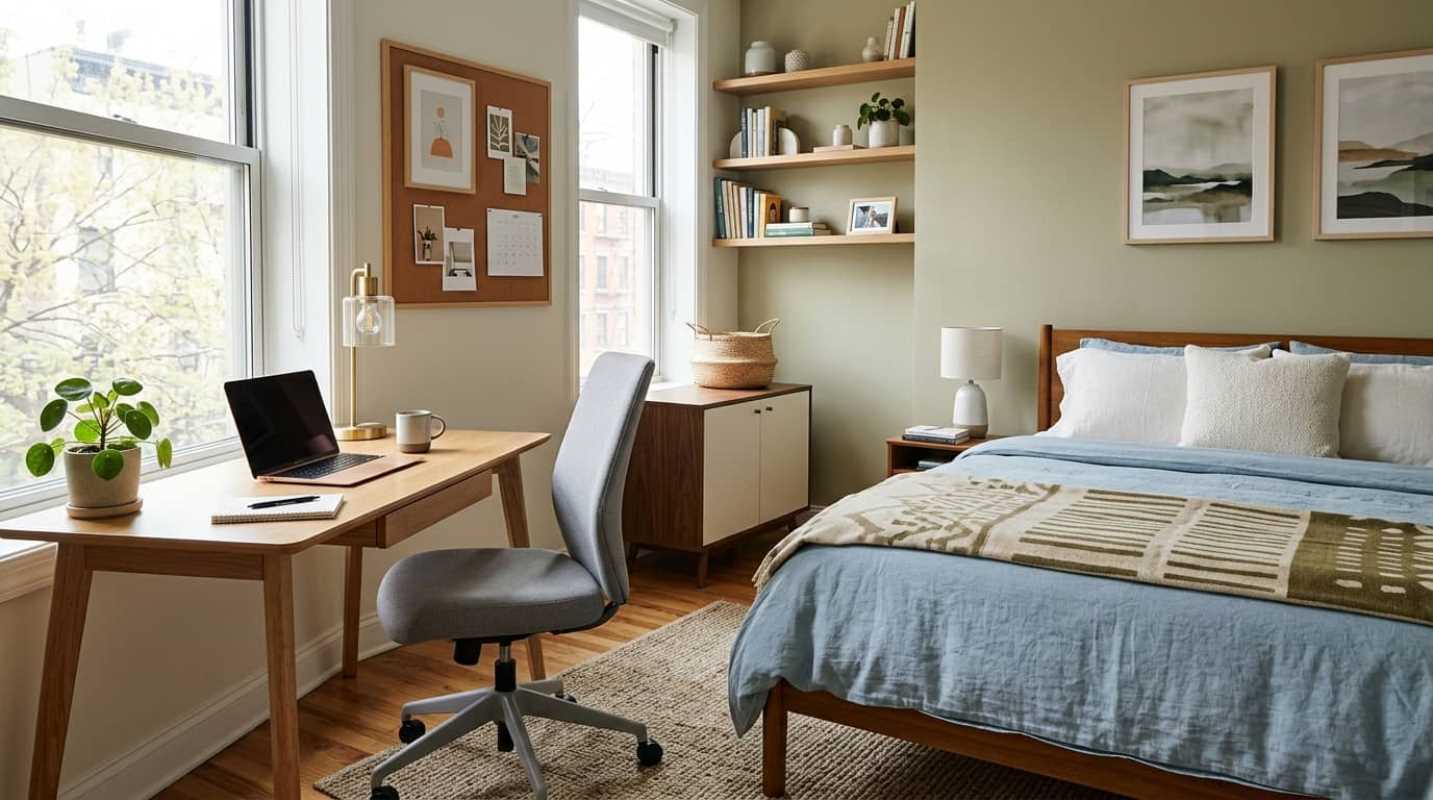
The secret is designing a space that feels intentional. It is about creating a cohesive room where both functions coexist without getting in each other's way. Your guest room should not feel like a corporate cubicle, and your office should not feel like a chaotic laundry folding station.
Strategic Layouts for Maximum Efficiency
How do you lay out a room that must transition from a high-stakes board meeting to a cozy bedroom? You start by planning the traffic flow and visual zones.
First, consider the first impression rule. When a guest walks through the door, they should see a welcoming space, not a chaotic tangle of computer cords. Position your daybed or sleeper sofa on the wall directly facing the door so the room immediately feels like a cozy retreat.
Next, think about where you place your desk. Natural light is excellent for your energy levels and makes you look great on video calls, but watch out for screen glare. Position your desk near a window, ideally at a right angle to the glass.
Finally, use visual zoning to separate your work life from your rest life. A stylish area rug can anchor the sleeping area, visually drawing a boundary line between the two spaces. If your room has a closet, you can even build a "coffice" by removing the closet doors and sliding your desk inside. When your workday ends, you can literally close the door on your job.
Space-Saving Furniture Solutions
To make a dual-purpose room succeed, you need furniture that works twice as hard. You cannot rely on bulky, single-use items that crowd the room.
Modern Murphy beds are the gold standard for a multifunctional bedroom. Forget the squeaky, heavy wall beds of the past. Today's options are highly engineered and incredibly easy to use. Some high-end models from Resource Furniture feature ingenious stay-level desk technology.⁴ When you pull the bed down, the integrated desk remains perfectly flat and horizontal, meaning you do not even have to clear your laptop or coffee cup to set up the bed. For renters who cannot drill into wall studs, freestanding cabinet Murphy beds like the Bestar Pur series fold up into a stylish chest during the workweek.
If a Murphy bed is out of your budget, daybeds are an excellent alternative. Designer Sara Touijer suggests using elegant daybeds because they act as a comfortable couch during your workday and easily transition into a bed for overnight guests. Look for options with built-in under-bed drawers to keep extra pillows and linens out of sight.
Let's look at some of the best products to help you pull this off.
Space-Saving Furniture Recommendations
You can also choose from several other space-saving options
• Murphy Beds: Modern options feature stay-level desks that keep your workspace flat when the bed is lowered.
• Daybeds: These act as a comfortable sofa during the day and easily transition into a bed at night.
• Sleeper Sofas: Modern memory foam mattresses have replaced the thin, springy options of the past.
• Fold-Down Desks: These mount directly to the wall and fold flat to save space when guests arrive.
For ultra-tight spaces, a minimalist fold-down desk can mount directly to the wall and fold completely flat when company arrives. This instantly removes the office vibe from the room.
Lighting and Atmosphere to Balance Productivity and Comfort
Lighting can make or break a multifunctional space. If your room relies on a single, harsh overhead light, it will feel like a sterile corporate office by day and an uninviting cave by night.
The trick is to layer your lighting. Instead of a clinical desk lamp, install swing-arm wall sconces. During the day, you can point the light directly at your desk for focused work. At night, your guests can swing the sconce toward the bed to use as a cozy reading light.
Your color palette also plays a major role in how the space feels. Use warm, calming neutrals like soft sages, warm beiges, or gentle greys. These shades keep the room feeling bright and open during your morning meetings, while remaining peaceful and relaxing when it is time to sleep.
Do not forget to soften the office aesthetic with textiles. A plush rug, some linen throw pillows, and textured curtains will instantly take the clinical edge off your computer monitors and filing cabinets.
The Final Polish and Finishing Touches to Welcome Guests
When guests arrive, they should feel like they are staying in a thoughtful boutique hotel, not sleeping in your corporate headquarters. This means you need to be able to quickly hide the office elements of the room.
Always make sure you leave some dedicated surface space for your guests. They will need a spot to charge their phone, set down a cup of water, and unpack their bag. If your desk is the only flat surface in the room, it needs to be completely cleared off before they arrive.
To make this transition as easy as possible, use this simple ten-minute checklist to turn your workspace into a welcoming guest suite.
1. Clear the desk: Shut down your laptop, hide your cords in a cable management box, and slip loose papers into a drawer.
2. Stash the chair: Roll your bulky ergonomic office chair into a closet or another room.
3. Deploy the bed: Pull down your Murphy bed, unfold your sleeper sofa, or dress your daybed with fresh, high-thread-count sheets.
4. Add hospitality touches: Leave a small basket on the desk with fresh towels, a bottle of water, and a card showing your home Wi-Fi password.
5. Adjust the lighting: Turn off the bright overhead lights, switch on the warm bedside lamps, and light a subtle candle to set a relaxing mood.
Sources:
1. Archie WFH Statistics
https://archieapp.co/blog/work-from-home-statistics/
2. LoctekMotion Home Office Ergonomics
https://www.loctekmotion.com/blogs/Ergonomic%20Design/Statistics%20That%20Need%20To%20Be%20Known%20About%20Home%20Office%20Ergonomics
3. The Daily Upside Remote Work Survey
https://www.thedailyupside.com/economics/personal-finance/new-study-shows-38-of-remote-workers-work-from-bed/
4. Resource Furniture Dual-Purpose Design
https://resourcefurniture.com/blogs/blog/how-to-convert-a-guest-bedroom-into-an-office
5. Resource Furniture Cabrio Desk Bed
https://resourcefurniture.com/products/cabrio